
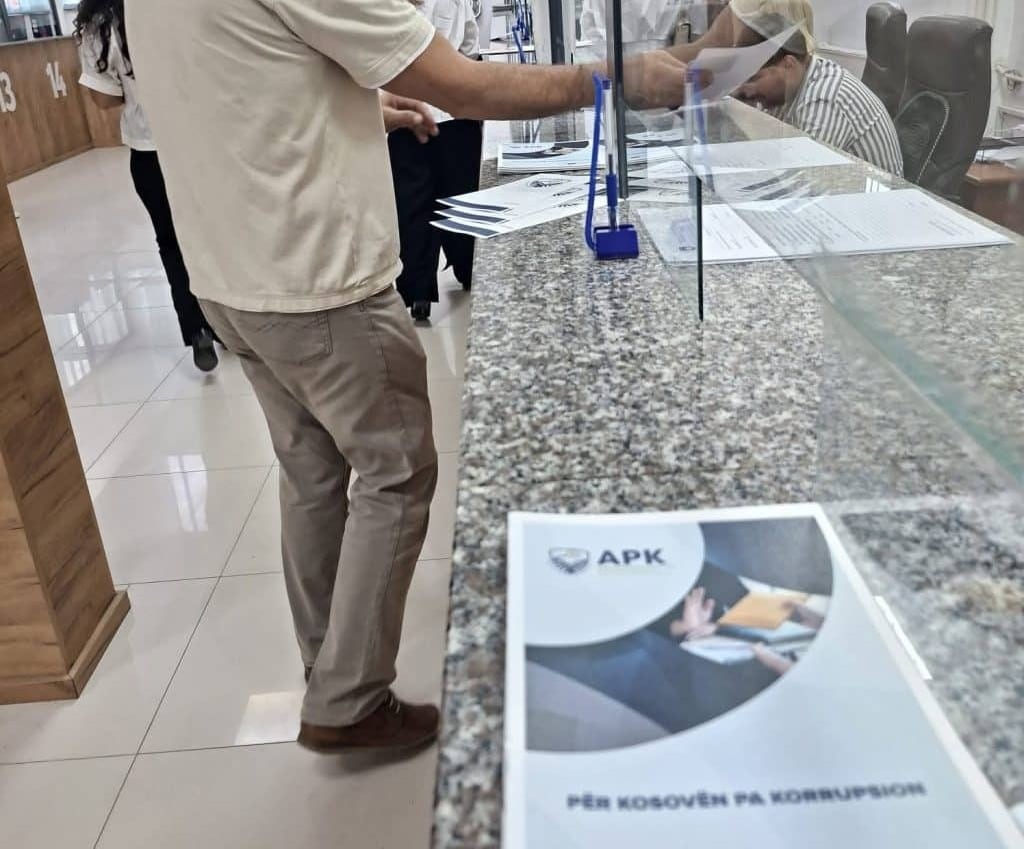
The Agency for the Prevention of Corruption (APC), through its Analysis and Assessment Unit, carried out a range of activities during the six-month period from January to June 2026 in the areas of corruption assessment in legislation and corruption risk assessment across various sectors and fields.
Corruption Assessment in Legislation
As part of its corruption assessment in legislation, the APC held four information meetings with public institutions regarding their legislative programmes and plans for 2026.
During this period, 3 draft normative acts were assessed, including 1 draft law and 2 secondary legislative acts, for which a total of 26 recommendations were issued. Of these, 10 recommendations have already been addressed, while the remaining recommendations are under assessment.
These assessments identified various corruption risk factors, including ambiguities and uncertainties related to legislative harmonisation and legal gaps, as well as a lack of sufficient preventive mechanisms, including excessive discretion and procedures or steps that are not clearly defined.
Corruption Risk Assessment in Various Sectors and Fields
In the area of corruption risk assessment, a new methodology for corruption risk assessment was developed and approved in partnership with UNDP.
The process of assessing corruption risks in public procurement was also launched. A working group of 25 members was established, comprising representatives of various institutions, public enterprises, the municipal level and civil society. To date, 3 working group meetings have been held.
Support to Institutions in Risk Assessment and Implementation of Measures to Address Corruption Risks
With the support of the Council of Europe/Project against Economic Crime (PECK III), the APC organised a four-day activity with the participation of 30 representatives from administrative institutions and public enterprises.
The activity aimed to provide support for implementing the findings of corruption risk assessments, developing appropriate mitigation measures and monitoring their effectiveness.
In coordination and cooperation with the Regional Anti-Corruption Initiative (RAI), a four-day national training on corruption risk assessment and corruption assessment in legislation was organised, focusing on the security and nature and biodiversity protection sectors.
A total of 54 representatives from relevant institutions and civil society participated in the training.
Self-Assessment of Mechanisms
During the reporting period, the APC completed the self-assessment process of whistleblowing and asset declaration mechanisms, while the self-assessment of conflict of interest and anti-corruption policies is currently being finalised.
These processes were carried out in accordance with the guidelines of the OECD Anti-Corruption Network for Eastern Europe and Central Asia (ACN), within the framework of the Istanbul Anti-Corruption Action Plan, 5th Round of Monitoring.
Through these activities, the Agency for the Prevention of Corruption aims to strengthen its preventive approach to combating corruption by contributing to the timely identification of risks, improving the legal and institutional framework, and developing and implementing concrete measures to manage and reduce these risks.
The Agency remains committed to strengthening preventive mechanisms and supporting public institutions in building a more effective system of integrity, transparency and accountability.